What is Indian Folk Music?
Indian Folk music is believed to have close ties with farming and other labor-intensive professions in the day-to-day lives of the “common man”. It developed to reverse the mind-numbing effects of a tedious and routine lifestyle. While traditional folk music has lost its popularity among the masses in today’s society it is still performed at religious celebrations and other events like the rites of passage. In addition, elements of the folk styles have been merged with more contemporary genres such as pop, rock and even rap.
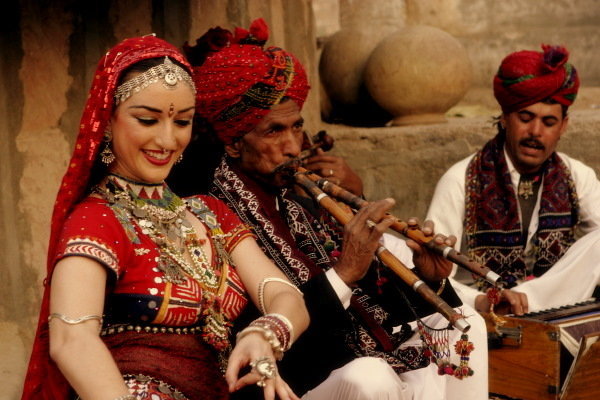
The earliest known records of Indian Folk Music are back dated to 1500 BC in the Vedic literature. Scholars suggest that the music is likely to be as old as the Hindu epic Mahabharata which was composed around 3137 BC after the Mahabharata war. Evidence in the lyrical content of these songs show that it was used to preserve ancient information for generations before solid material became available to the general public. Folk music has become such an integral part of Indian culture that almost every state has its own style. It is truly a dynamic playground but Indian folk music maintains the rich historical and cultural diversity of the people.
What are the elements of Indian Folk music?
- There are no set principles to folk music as opposed to classical music where there are strict rules and principles that must be followed. However, there are specific patterns that distinguishes each style such as a difference in the rhythmic structure, instruments used, scales and religious circumstances that guides the performance and evolution of the music.
- Repetition. There is an immense amount of repetition in Indian folk music. Usually the first melodic or rhythmic phrase is repeated and then developed to create many variations of the initial phrase. An example of this is in Punjabi folk music of the Punjabi people
- Question and answer format. In songs, the first verse asks as question which is followed by a subsequent answer.
- Close association to mythological characters. As songs can be linked back to the Mahabharata and Bhagavad Gita. Characters such as Rama, Sita, Krishna, Parvati, and Apollo are often a subject matter in various styles such as Bhajans and other religious prayer and dance. In this excerpt titled “Religious Folk Indian Prayed Dance” the folk song Mangalam Ganesham is used to display a religious dance and ceremony.
5. Indian folk music is commonly improvised with fluent and natural lyrics, melodic lines and rhythmic patterns.
“What are some of the Common instruments used in Indian music?”
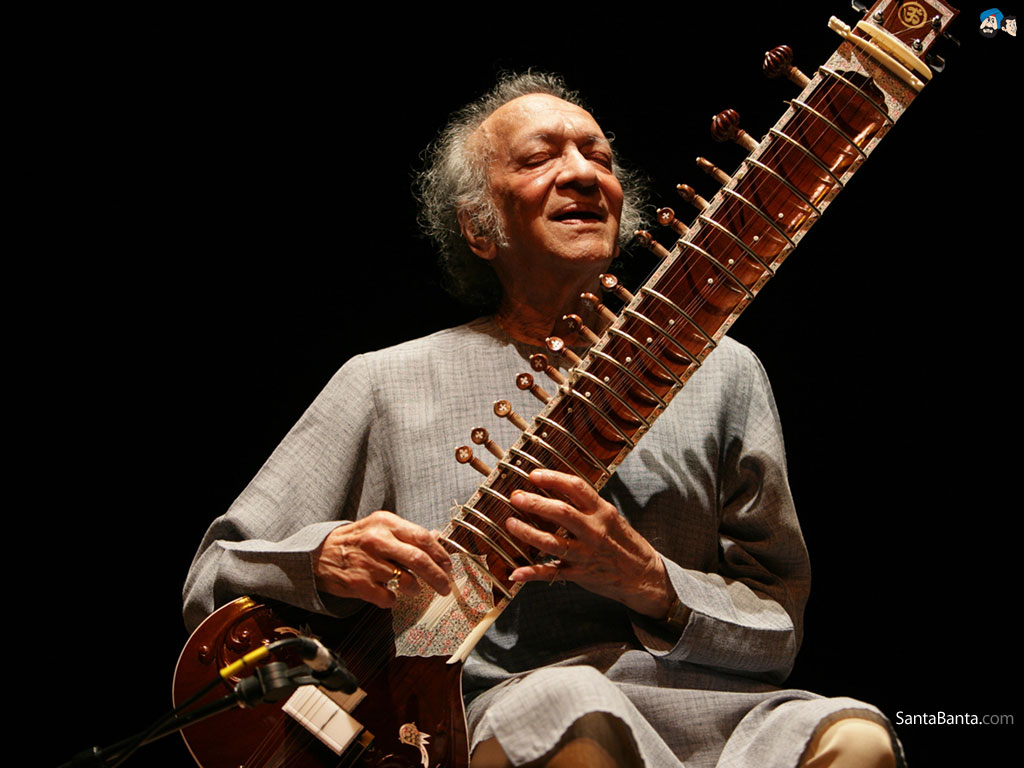
1. The sitar. It is a plucked stringed instrument, originating from the Indian subcontinent and is commonly used in Hindustani classical music. The sitar flourished in the 16th and 17th centuries and arrived at its present form in 18th-century India. It derived its distinctive color and resonance from sympathetic strings, bridge design with a long hollow neck and a gourd-shaped resonator. When the stings are struck, they vibrate and is transmitted to the resonance chamber that amplifies the sound, and so produces its sound unique sound.
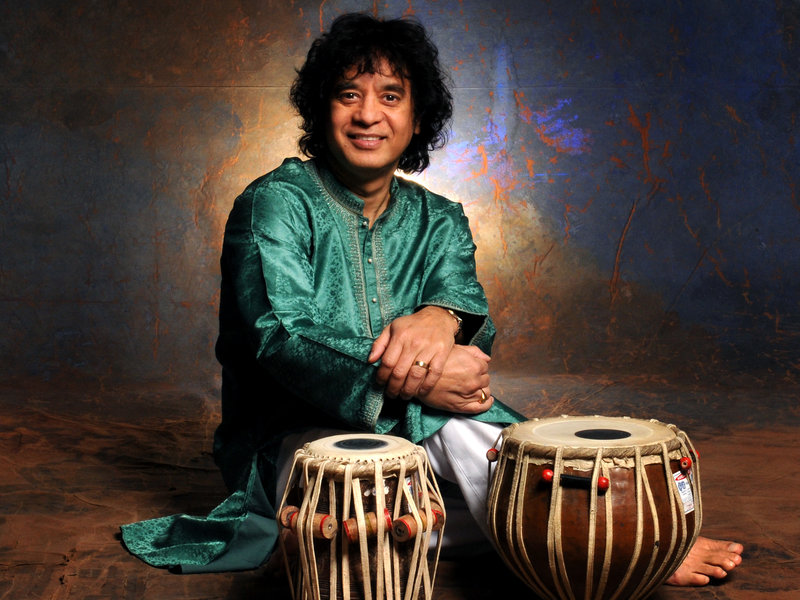
2. The tabla is a percussive instrument that originated at the Indian subcontinent It consists of a pair of drums used in traditional, classical, popular and folk music. It has been a particularly important instrument in Hindustani classical music since the 18th century, and remains in use in India, Pakistan, Afghanistan, Nepal, Bangladesh, and Sri Lanka. The playing technique is complex and involves extensive use of the fingers and palms in various configurations to create a wide variety of different sounds and rhythms. Interestingly, the smaller drum of the pair can be tuned to the key of the performance.
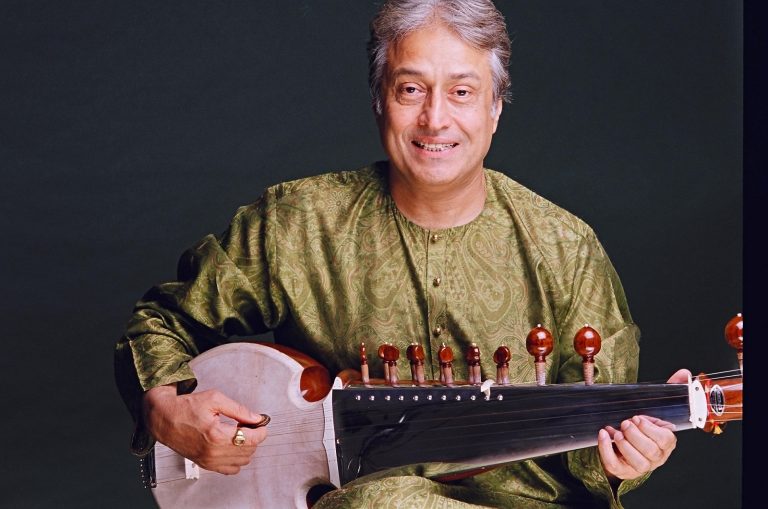
3. The Sarod is a stringed instrument, mainly used in Hindustani music on the Indian subcontinent. Along with the sitar, it is among the most popular and prominent instruments. The sarod is known for its deep, weighty, introspective sound, in contrast with the sweet, overtone-rich texture of the sitar, with sympathetic strings that give it a resonant, reverberation quality. It is a fret-less instrument able to produce the continuous slides between notes.
The lack of frets and the tension of the strings make the sarod a very demanding instrument to play, as the strings must be pressed hard against the fingerboard.
There are two approaches to stopping the strings of the sarod. One involves using the tip of one’s fingernails to stop the strings, and the other uses a combination of the nail and the fingertip to stop the strings against the fingerboard.
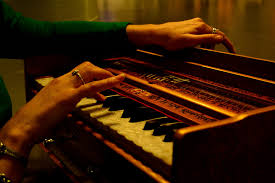
4. The Harmonium. This is a type of free-reed organ that generates sound as air flows past a vibrating piece of thin metal in a frame. The piece of metal is called a reed.
More portable than pipe organs, its volume and tonal range were limited. They generally had one or sometimes two manuals, with pedal-boards being rare. The finer pump organs had a wider range of tones, and the cabinets.
“What are the styles associated with Indian Folk music?”
While there is a diverse body of Indian folk music the following styles can be found embedded in the culture of Trinidad and Tobago. Most of which are displayed during the rites of passage such as birth, marriage and death.
Punjabi
Punjabi is a style of Indian folk music that originated within South Asia. It is perhaps one of the most internationally recognized veins and has significantly influenced an even more popular style called “Bollywood” Punjabi is surely one of the most lively styles with trans-like features and is often coupled with a mesmerizing performance with high energy levels. The music is produced using traditional instruments such as the Tumbi, Algoze, Dhadd, Sarangi, Chimta. It is typically performed during rites of passage and festivals all year round. The different forms include Tappa, Bhangra and Jugni.
Bhajan
This form of Indian folk music originated in Gujarat located in western India. Bhajan is merely one of the four forms of folk music that belong to Gujarat. It is a religious devotional music that seeks the blessings of gods and goddesses and it typically utilities string instruments such as the sitar, tapura to create a mystical atmosphere. Voice accompanied by the harmonium is typical at religious ceremonies. During a prayers, various gods are worshiped separately and so each one has a specific compilation of Bhajans at it is sung accordingly.
Bollywood
Bollywood is the most popular style of folk music in India and evolved in 1899 in Munbai to be used in the film industry as a form of energetic music that can accommodate rhythmic dancing, devastating circumstances, love, drama and success. It is a mixture of Indian classical, folk and western music. Classical singing is sometimes infused with folk rhythms and western harmonies to create a hybrid folk music that is highly distinguishable and immensely popular internationally. Instruments that are commonly used in Bollywood songs include piano, tabla, guitar, harmonium, keyboard, trumpet, saxophone and violin.
Baul
A group of religious musicians emerged from Bengal during the 18th and 19th and came to be known as the Bauls of Bengal. They were influenced by both Muslim and Hindu philosophers and travelled throughout India insearch of eternal truth. As the Bauls travelled across the nation, they performed their folk music whenever possible especially during religious ceremonies and festivals. The instruments used to accompany their singing are Ektara, Khamak and Dotara.
*Youtube link to be added to the blog
How was Indian Folk Music Brought to Trinidad and Tobago?
Between 1845-1917 over 140 000 East Indians came to Trinidad and Tobago from north India . They brought with them traditional forms of Indian culture and livelihood. Their music, food, religious traditions and wisdom greatly affected our region. While contemporary influences have dramatically changed the traditional form, the elements of folk music still exists with our society today.
Blending Our Culture
In Trinidad and Tobago, the energetic and dynamic elements of Indian folk music have been extracted and expressed in various ways predominantly during religious ceremonies and festivals. Special occasions such as Diwali, Ramleela, the rites fate and holy worship all contain aspects of folk music.
The rhythms of Punjabi are emulated by Tassa players in Trinidad and Tobago. In addition, Bhangra dancing is sometimes present during tassa performances at weddings, birthdays and other celebrations. Tassa playing has even influenced aspects of Carnival where this form of East Indian folk music has been present for generations.
Bollywood entertainment has been used at Diwali celebrations and Mastana Bahar (an annual singing competition held in south Trinidad) in Trinidad and Tobago for several years. Although it is not the traditional music for the event it, has become accepted as among the population. The Diwali Nagar is an annual event lasting up to a week where both Bhajans and Bollywood songs are performed for religious worship and entertainment.
Finally, Indian folk music has made its way onto local media such as radio and television. There are religious radio stations that are dedicated towards worship and play popular Bhajans produced by both local and international recording artists . In addition the latest Bollywood movies and television series are always being showcased in local cinemas and cable channel.
References
https://chandrakantha.com/articles/indian_music/folk_music.html
https://www.jagranjosh.com/general-knowledge/folk-music-and-its-characteristics-1532520459-1
https://jillbrary.wordpress.com/bollywood-and-libraries/brief-history-of-bollywood/
https://jillbrary.wordpress.com/bollywood-and-libraries/brief-history-of-bollywood/
Google Slides Reference to Slides used for the Group Presentation
https://docs.google.com/presentation/d/1bPRXHxmRr4Yi6FUEIkluWnEvSGVxLT3GRp8Ueu-gQY0/edit#slide=id.p4
 Indian Folk Music